Why So Many People Are Choosing Florida’s Gulf Coast

Every year, hundreds of thousands of people make the decision to relocate to Florida, and a growing share of them are landing along the Gulf Coast. The combination of warm weather, no state income tax, a strong and diverse economy, and a quality of life that’s difficult to find elsewhere has made the Tampa Bay to Sarasota corridor one of the most attractive relocation destinations in the country.
If you are earlier in the process, start with the full Tampa Bay relocation guide for the area by area breakdown.
But relocating to this part of Florida isn’t a single decision, it’s a series of them. Which city? Which neighborhood? Buy or rent first? How does the market work for out-of-state buyers? What should you actually know before you commit?
So we wrote this guide to answer those questions honestly, with the depth and detail a move this big deserves. Maybe you are coming from the Northeast, the Midwest, California, or somewhere else. In any case, here is what you need to know about relocating to Tampa Bay, St. Petersburg, and Sarasota in 2026.
Understanding the Region: Tampa Bay vs. St. Pete vs. Sarasota
One of the first things out-of-state buyers discover is that “Tampa Bay” is not a single place. Instead, it’s a region that encompasses several distinct cities and communities. Each one has its own character, real estate market, and lifestyle profile. So once you understand the differences between the major areas, you can narrow your search quickly.
Tampa
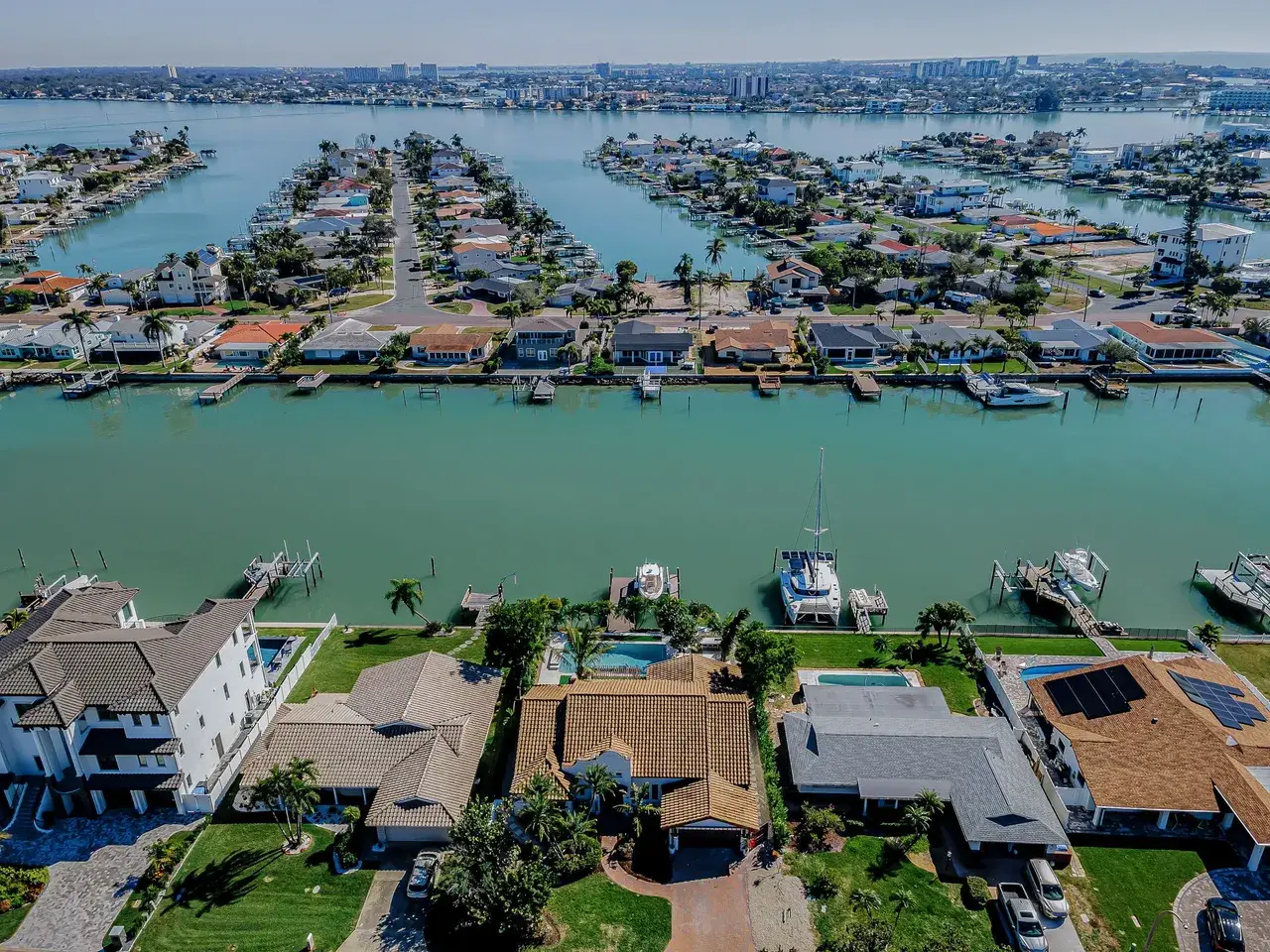
Tampa is the region’s largest city and its economic engine. It’s home to a thriving downtown, multiple professional sports teams, and the University of South Florida and University of Tampa. You will also find major healthcare and finance employers, plus a Port that drives significant commercial activity. As a result, Tampa draws buyers who want urban energy, career proximity, and access to some of Florida’s best neighborhoods, particularly in South Tampa, Hyde Park, and Palma Ceia.
→South Tampa Real Estate: A Buyer’s Neighborhood Guide
→ Hyde Park Tampa: A Neighborhood Guide for Buyers in 2026
→ Palma Ceia Tampa: A Neighborhood Guide for Buyers in 2026
St. Petersburg
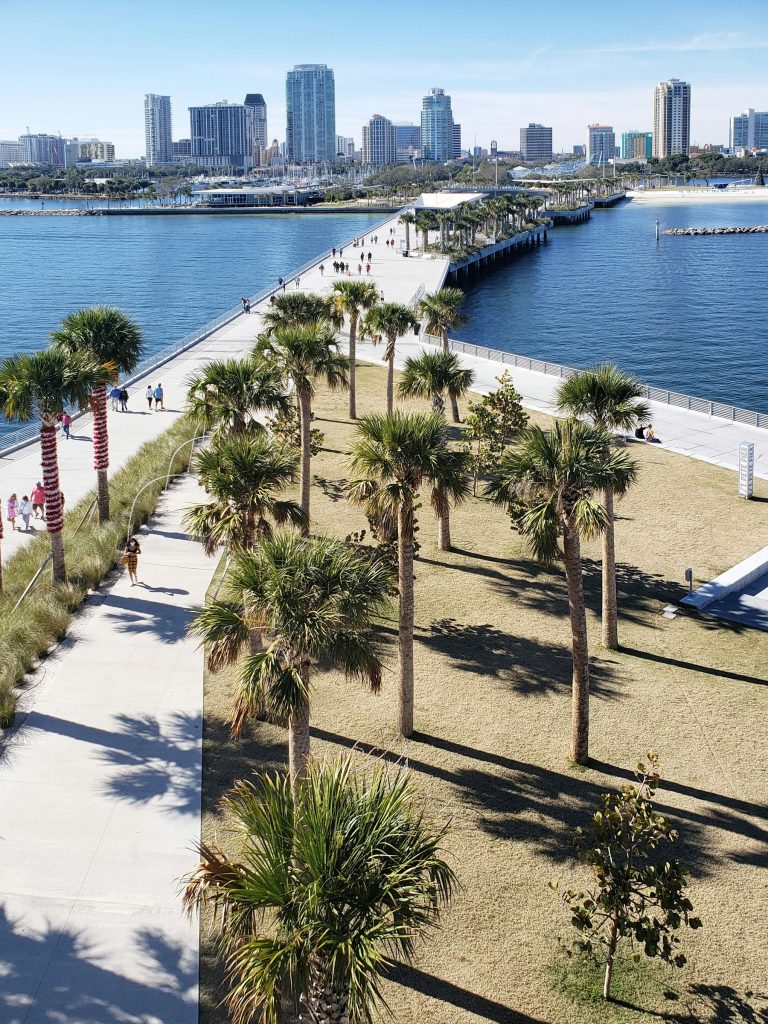
St. Pete sits across the bay from Tampa on the Pinellas Peninsula. Over the past decade, it has transformed into one of Florida’s most lively and walkable cities. It now has a thriving arts scene, a celebrated restaurant culture, and waterfront living that rivals far more expensive coastal cities. So St. Pete tends to attract buyers who want a more creative, community-oriented lifestyle, and those who want genuine walkability in a city that doesn’t feel like a resort.
→St. Petersburg FL Neighborhoods Guide for Buyers in 2026
Sarasota
Sarasota sits about an hour south of Tampa and offers a different pace and aesthetic. It’s also culturally rich, with the Ringling Museum, the Sarasota Opera, and a world-class theater scene. Then there is Siesta Key Beach, consistently ranked among the best beaches in the country. As a result, Sarasota attracts a mix of retirees, remote workers, second-home buyers, and young professionals who want Gulf Coast living without the intensity of a major metro.
→ Sarasota Neighborhoods Guide for Buyers in 2026
The In-Between: Lakewood Ranch, Lutz, Valrico, and Beyond
The Gulf Coast corridor also includes suburban and master-planned communities like Lakewood Ranch, Wesley Chapel, Lutz, Valrico, Ruskin, and others. These areas offer newer construction, top-rated schools, and more space per dollar than the urban cores. So buyers relocating with families, or those who prioritize school districts and community amenities, often end up exploring them.
→Why Lakewood Ranch Is One of Florida’s Top Luxury Living Destinations
→Why More Buyers Are Expanding Their Search Beyond Tampa in 2026
The Real Estate Market in 2026: What Relocating Buyers Should Know
The Tampa Bay and Gulf Coast real estate market has shifted meaningfully since its 2021 to 2022 peak. Inventory has increased. Price growth has also moderated in many segments. And buyers now have more time to make decisions than they did when homes were selling in hours.
In many ways, that shift is good news for relocating buyers. That is especially true for anyone the frenzy priced out or outcompeted. But it doesn’t mean the market is soft across the board. Well-located, well-priced homes in desirable neighborhoods are still selling with strength. The difference is preparation. Buyers who are pre-approved and clear on their priorities are in a much stronger position than two years ago, especially when they work with a knowledgeable local agent.
→ Is Now Actually a Good Time to Buy in Tampa Bay? (2026 Update)
→Tampa Bay Real Estate in 2026: What Today’s Market Shift Means for Buyers
Florida’s Financial Benefits: What Relocation Actually Does for Your Bottom Line
One of the most compelling arguments for relocating to Florida is the financial impact of the move itself. In fact, it often surprises buyers who haven’t run the numbers.
No State Income Tax
Florida has no state income tax. By comparison, state income tax rates in New York, California, Illinois, or New Jersey can range from 5% to over 13%. So for buyers relocating from those states, that difference alone can mean tens of thousands of dollars a year. Of course, the exact savings depend on income level. In fact, for executives, business owners, and high earners, this tends to be the single biggest financial factor in the move.
Homestead Exemption
Florida offers a homestead exemption of up to $50,000 on a primary residence’s assessed value for property tax purposes. More significantly, the Save Our Homes cap limits how much a homesteaded property’s assessed value can increase each year. That cap currently sits at 3% or the change in the Consumer Price Index, whichever is lower. So for buyers who plan to stay in a home long-term, this protection becomes increasingly valuable over time.
Estate and Inheritance
Florida also has no estate tax or inheritance tax. That makes it a favorable environment for wealth transfer and long-term financial planning. As a result, it draws buyers from higher-tax states, particularly retirees and those with significant assets.
Cost of Living: What to Expect When You Arrive
People relocating from major metros often misunderstand Florida’s cost of living. Yes, housing costs in Tampa Bay and Sarasota have risen substantially over the past several years. Even so, the overall cost of living remains favorable compared to cities like New York, Los Angeles, Boston, and Chicago. That is because of the tax environment, lower utility costs in many cases, and the absence of extreme winter energy bills.
That said, buyers should budget carefully for a few Florida-specific line items:
- Homeowner’s insurance: Insurance costs have risen significantly across Florida in recent years, driven by storm risk and carrier exits from the market. Buyers should budget for this and factor it into affordability calculations, particularly in coastal and flood-zone areas.
- HOA fees: Many of the most desirable communities, particularly master-planned developments and gated neighborhoods, carry monthly HOA fees that can range from modest to substantial.
- Flood insurance: Depending on location and flood zone designation, flood insurance may be required by a lender or strongly advisable. Costs vary widely and should be investigated before making a purchase decision.
- Utilities: Air conditioning costs during Florida summers can be significant. Energy-efficient construction and newer HVAC systems make a meaningful difference.
Choosing the Right Neighborhood for Your Life
One of the most important, and most underestimated, parts of relocating is choosing the right neighborhood, not just the right city. That is because the Gulf Coast has tremendous diversity across its communities. In fact, where you land will shape your day-to-day life more than any other single decision.
Tampa Bay Area Comparison (2026)
| Area | Lifestyle | Housing Style | Best For | Considerations |
|---|---|---|---|---|
| Tampa | Urban + professional | Mix of historic + modern | Career-focused buyers, city access | Traffic, pricing in South Tampa |
| St. Petersburg | Walkable + waterfront | Condos, historic homes | Lifestyle-driven buyers, second homes | Limited inventory in top areas |
| Sarasota | Coastal + relaxed | Waterfront + low-density | Retirees, second-home buyers | Distance from major job hubs |
| Lakewood Ranch | Master-planned | New construction | Families, structured communities | HOA + ongoing development |
| Valrico / Lutz | Suburban + spacious | Larger homes, more land | Buyers wanting space + value | Less walkability |
| Wesley Chapel | Growth-focused suburb | New builds + amenities | Buyers prioritizing schools + value | Continued construction nearby |
Tips for Out-of-State Buyers Navigating a Remote Search
Relocating buyers face a unique challenge. They’re often making one of the largest financial decisions of their lives in a market they don’t yet know intimately. Sometimes they are also doing it from hundreds or thousands of miles away. So here is what we consistently tell out-of-state buyers to help them handle the process well.
1. Don’t skip the in-person visit
Online listings, virtual tours, and video walkthroughs are useful tools, but they cannot fully replace walking a neighborhood, driving the commute, and getting a feel for the community. If at all possible, plan at least one focused in-person visit before making an offer. Then a good agent can help you get the most from that trip with an efficient itinerary for the areas you’re considering.
2. Get pre-approved before you arrive
A mortgage pre-approval in hand before you begin touring homes signals seriousness to sellers. It also lets you move quickly when you find the right property. Cash buyers should have proof of funds ready. After all, well-priced homes still attract competition, so having your finances in order is a meaningful advantage.
Flood Zones, Local Expertise, and Timing
3. Understand flood zones before you fall in love with a property
Florida’s flood zone designations affect insurance costs, lender requirements, and long-term value in ways that buyers from non-coastal markets may not anticipate. So before getting emotionally attached to a property, ask your agent to pull the FEMA flood zone designation. Then get an insurance estimate, because this information can significantly affect the true cost of ownership.
4. Work with an agent who knows the specific neighborhoods you’re considering
Tampa Bay and Sarasota encompass dozens of distinct neighborhoods and sub-markets. For example, a home in Hyde Park performs quite differently from a comparable home in Lutz or Ruskin. So work with an agent who has direct experience in the areas you’re targeting, not just the broader region. That experience makes a real difference in the quality of guidance you’ll receive.
5. Don’t rush, but don’t delay indefinitely
The 2026 market gives buyers more time to be deliberate than the frenzied pace of 2021 and 2022. So use that time wisely. But recognize that well-located, well-priced homes in the most desirable neighborhoods still move. In the end, the goal is to be ready, not rushed.
Frequently Asked Questions About Relocating to Tampa Bay
Is Tampa Bay a good place to relocate to?
Yes. No state income tax, a strong economy, beaches, and a wide range of communities make it one of Florida’s top relocation destinations.
What is the difference between Tampa, St. Pete, and Sarasota?
Tampa offers big-city energy, St. Petersburg blends arts and waterfront, and Sarasota leans upscale and beach-focused, all within the same region.
How much can I save on taxes by moving to Florida?
Florida has no state income tax, which can mean significant annual savings for buyers relocating from higher-tax states.
Can MJM Group help me relocate from out of state?
Yes. We specialize in guiding remote and relocating buyers through every step, contact us to begin.
How MJM Group Works with Relocating Buyers
At MJM Group, a significant portion of the buyers we work with are relocating from out of state. In fact, we’ve helped clients from New York, New Jersey, Connecticut, Illinois, California, and beyond make the move to Tampa Bay and the Gulf Coast. Many of them started without the benefit of extensive local knowledge.
Our approach is to start with a genuine conversation about your lifestyle, your priorities, and your timeline. We don’t push neighborhoods. Instead, we listen and help you find where you actually belong. Then, once we understand your goals, we build a search and visit strategy that makes the most of your time. It works for a long weekend of exploring, and it also works when you need to decide in a compressed window.
Because two agents work together on every transaction, clients receive consistent communication and steady guidance throughout the process. That means no hand-offs, no dropped details, and no unanswered questions. From the first conversation until the day you receive your keys, you’ll know exactly where things stand and what comes next.
Are you planning a relocation to Tampa Bay, St. Petersburg, Sarasota, or anywhere along Florida’s Gulf Coast? Then we’d welcome the opportunity to be a resource. That goes for buyers ready to move now, and also for those just beginning to explore their options.
→ Schedule a consultation
→ Explore current listings
Also, if the Bradenton area is on your tour list, see our full guide to the SeaFlower community in Bradenton.