

How accurate is the Zillow Zestimate? For homes actively listed for sale, quite accurate: a 2.4% national median error, by Zillow’s own published figures. For off-market homes, the error roughly triples, to 7.49%. That gap, and everything the algorithm can’t see behind it, is what this guide covers.
To be clear, we use Zillow, and we use AI tools. Nearly 100% of buyers begin their search online, according to NAR, and the portals are genuinely useful for scanning inventory, tracking price cuts, and getting a rough sense of a market. The problem isn’t the technology. It’s mistaking a starting point for a decision. When it comes to one specific house on one specific Tampa Bay street, the algorithm is guessing about the things that matter most.
How Accurate Is the Zillow Zestimate by the Company’s Own Math?

Zillow publishes its own Zestimate accuracy figures, and they’re worth reading closely. As of early 2026, the median error of the Zillow Zestimate on homes actively listed for sale is 2.4% nationally; 69.2% of on-market Zestimates land within 5% of the eventual sale price, and 89.7% land within 10%. For Tampa specifically, the on-market median error runs around 2.8%. Reasonable, as far as it goes, though part of that accuracy comes from the model leaning on the list price a human agent already set.
Off-market homes are a different story for the Zillow Zestimate. The median error jumps to 7.49%, roughly three times worse, and only 43.1% of off-market Zestimates land within 5% of actual value.
Do the math on a typical Tampa Bay purchase. On a $450,000 home, a 7.49% median miss is roughly $33,700 in either direction, and “median” means half of homes miss by more than that. That’s not a rounding error. That’s a down payment.
The gap exists for a simple reason: an AVM (automated valuation model, the software behind every instant estimate) works from public records, past sales, and listing data. It has never stood in the driveway. One documented example from AgentsGather in February 2026: county records showed a home at 2,200 square feet when it actually measured 3,400, producing an undervaluation of roughly $75,000. The model wasn’t wrong; its inputs were.
Even Zillow has acknowledged the limits of pricing at scale. The company shut down its Zillow Offers home-buying business in November 2021 after its pricing models mis-valued homes at scale, taking a write-down of more than $500 million. And Zillow co-founder Spencer Rascoff’s own Seattle home famously sold in 2016 for roughly 40% below its Zestimate. None of that makes Zillow useless. It makes the point that even the people who built the algorithm don’t treat it as a purchase price.
So what, specifically, can’t the algorithm see in Tampa Bay? Five things.
1. Which Side of the Flood Line the House Sits On
Flood zones here change street by street, sometimes lot by lot. An AVM effectively prices the block; FEMA draws the line through it. Two homes 200 feet apart can carry completely different flood insurance requirements and premiums, and per LivingCentralFL analysis from March 2026, roughly 45% of St. Petersburg properties face flood risk over a 30-year horizon.
The dollars are real, too. Per NerdWallet data from May 2026, NFIP flood premiums in Florida average about $938 a year statewide, but roughly $1,418 in Hillsborough County and $1,392 in Pinellas, and homes in higher-risk zones run well beyond those averages. The Zestimate quotes none of it.
We pull the actual FEMA zone and elevation picture on every home our buyers get serious about. It changes both the monthly cost and, candidly, sometimes the decision. If timing questions are on your mind too, we covered the broader picture in whether now is actually a good time to buy in Tampa Bay.
2. The Roof’s Age, Which in Florida Means Insurability
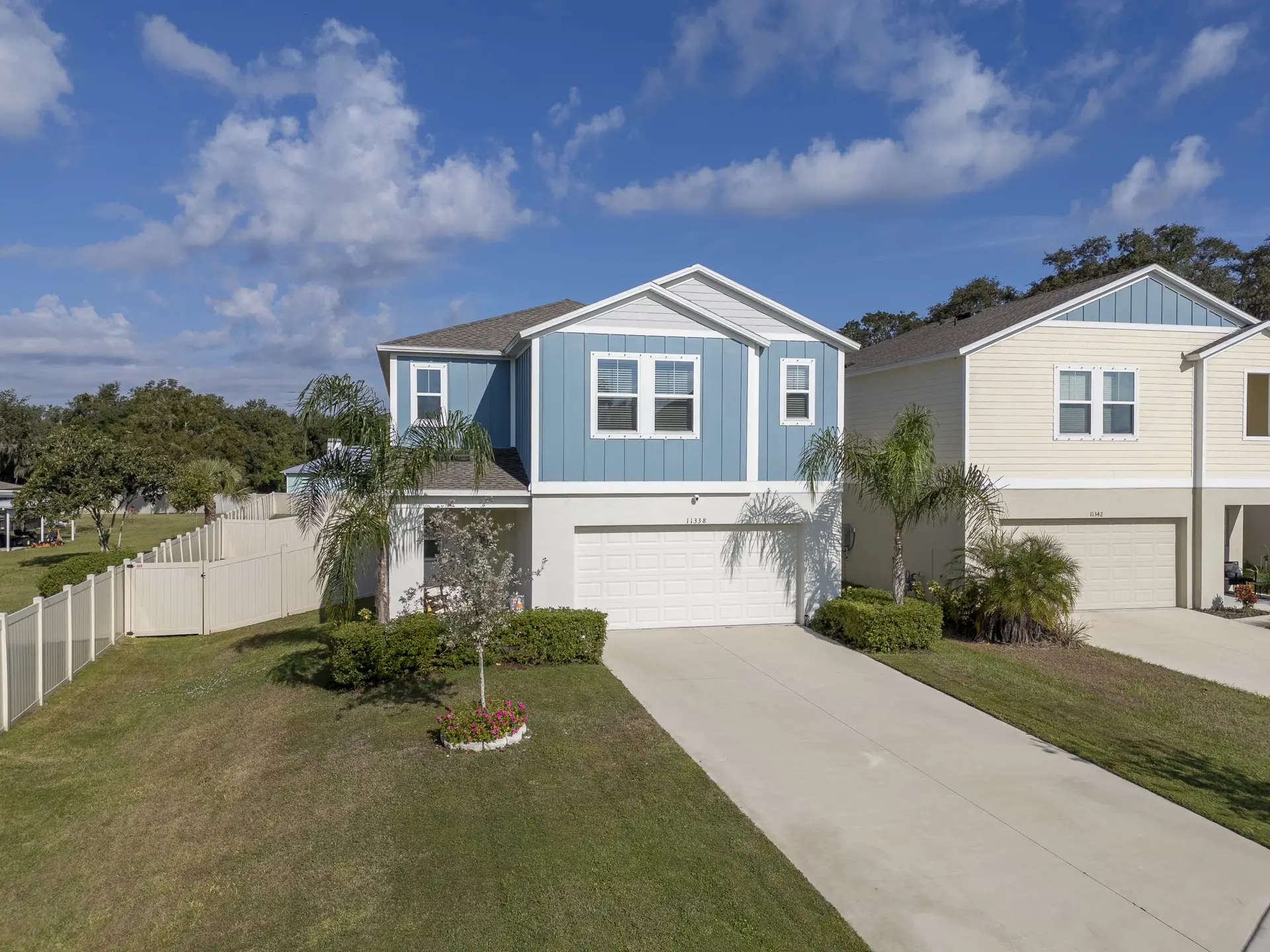
In most states a roof is a maintenance item. In Florida, it’s an underwriting event. Under the state’s roof-age framework (Senate Bill 76 and its 15-year provisions), an older roof can sharply limit your insurance options or cost, and shingle roofs in Florida’s sun typically last only about 12 to 15 years.
The stakes keep rising: home insurance premiums are up 48% nationally since February 2020, climbing nearly twice as fast as incomes, per a Zillow and Thumbtack analysis from November 2025. Roof age often decides where on that curve a given house lands.
Two houses that photograph identically can differ by thousands of dollars a year in premium based on nothing but the roof’s birthday. No Zestimate input captures that. Before you fall in love with a house, we find out how old the roof is and what an insurer will actually quote on it.
3. CDD Fees That Never Appear in the Advertised Price
A CDD (Community Development District) fee is an annual assessment, collected with your property tax bill, that repays the bonds that built a community’s roads, ponds, and amenities. They’re standard in Tampa Bay’s newer master-planned communities and they’re excluded from advertised prices and from AVM estimates alike. In large master-planned communities such as Lakewood Ranch, annual CDD assessments typically run roughly $1,200 to $4,500 depending on the village.
Two “identically priced” homes, one with a CDD and one without, are not identically priced. We put the real all-in monthly number in front of our buyers before they offer, not after.
4. Seawall and Dock Condition on Waterfront Homes
On canal and bayfront properties, the most expensive component may not be inside the house. A failing seawall is a repair that runs well into five figures, and dock condition varies enormously; yet no automated model has any input for either. The water view is priced in. The seawall holding it back is not.
This is exactly why waterfront purchases deserve their own playbook, which we laid out in our guide to buying a waterfront home on the Gulf Coast, including the specialty inspections we recommend before any offer.
5. Everything the Photos Are Designed to Hide
Listing photos are marketing, not disclosure. They don’t transmit smells, road noise, power lines, sloping floors, deferred maintenance, an unpermitted addition, or the condition of the neighboring property. Wide-angle lenses and careful cropping exist for a reason.
Interior renovations cut the other way, too. A beautifully updated kitchen the county has no record of is invisible to the algorithm, which is how genuinely underpriced homes hide in plain sight. The only fix is boots on the ground: walk the house, drive the street at rush hour, and stand in the backyard and listen.
Frequently Asked Questions
Zillow reports a median error of about 1.8% for on market homes, but the median error jumps to 7.49% for off market homes.
The algorithm cannot see flood exposure, roof age, CDD fees, seawall and dock condition, or interior condition, all of which move real Tampa Bay values.
Pair any online estimate with a comparative market analysis from a local agent who prices the factors the algorithm misses.
Want the Street-Level Read on a Home You’re Watching?
Here’s our honest position: keep the Zillow app and treat the Zillow Zestimate as a starting point. Track your saved searches. Ask the AI chatbots your questions. Then, before real money moves, verify the five things above the old-fashioned way, because every one of them is invisible to the algorithm and every one of them shows up in your monthly cost or your resale value.
Send us the address of any home you’re watching. We’ll tell you what the estimate can’t: flood line, roof and insurance outlook, CDD reality, and what we see that the photos don’t show. You’ll have the full picture before you decide, with no obligation attached. And if you’re a homeowner curious what the algorithms say about your house, start with our guide to what your home is actually worth in Tampa Bay. Where Every Move Matters.
Market data referenced is believed accurate as of publication but changes frequently; we’re happy to pull current numbers for your specific search.
MJM Group | Coldwell Banker Realty · mjmgroup@cbrealty.com · (239) 994-2804 · (813) 833-3073


